It has been happening in meetings for a few months now, almost always with the same face. Somebody opens ChatGPT, types something like "which companies would you recommend for this in Costa Rica?", and the answer names three or four. None of them is theirs.
The first thought is that the AI got it wrong. It didn't. It did exactly what it knows how to do: build an answer out of what it could read and attribute to someone.
What actually happens when somebody asks
A modern assistant doesn't answer from memory. When the question is about companies, prices, services or anything that changes, it goes out and searches, pulls a handful of pages, reads them and builds an answer from what it found.
That is the moment a company is in or out. It isn't the one that spends most on ads or has the prettiest site. It's the one that was on the pages the assistant managed to read, said in a way that can be repeated without being rewritten.
So there are two separate questions, and it helps not to mix them:
- Is your site among the pages it can read? That is technical, and it has a yes or no answer.
- When it reads it, does it find an answer or a brochure? That is about content, and it is where most companies lose.
The most common case: the site can't be read
Many modern sites don't send the page finished. They send a program that assembles the page inside the visitor's browser. For someone with Chrome open there is no difference. For a robot that doesn't run that program, the page arrives practically empty.
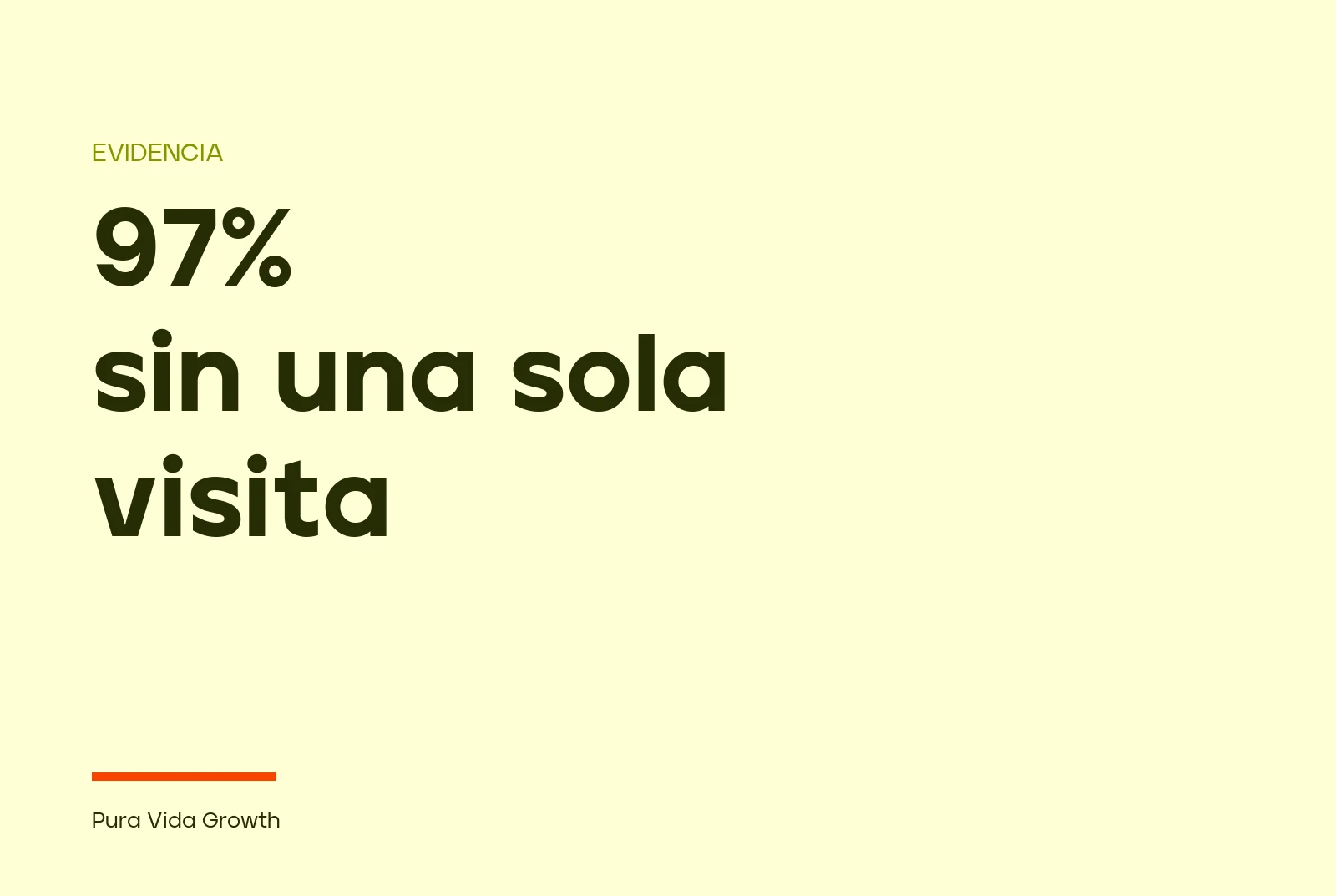
This isn't a hunch. Vercel, which runs a large part of the modern web, measured how these robots actually behave and says it plainly: none of the major AI crawlers render JavaScript. They even download it: JavaScript files are around 11.5% of what ChatGPT's crawler requests and 23.8% of what Claude's does. They fetch it and never run it.
The result is a company with an excellent site that, as far as the AI is concerned, has no site. And since the answer gets built anyway, it gets built with whatever is around: an old directory, a three-year-old press mention, a competitor's site that can be read.
The second case: the site reads fine and answers nothing
The other half of the problem is more uncomfortable, because code doesn't fix it.
Most corporate pages are written for somebody who already decided to walk in. They open with a promise, continue with three values and end in a form. They don't say what problem they solve, for whom, in how long, or what happens when the case is different.
A machine looking for something to answer with needs exactly that. A page that says "integrated solutions for growing businesses" is no use to anyone, machine or human. A page that says, in its first paragraph, what gets done when a site gets visits and starts no conversations, is.
Why this is happening now and not two years ago
It is worth putting the real size of this on the table, because there is a lot of noise around it.
Measured by traffic arriving at websites, AI platforms are still small: 0.32% of all web traffic, according to a study of 101,574 sites across 250 countries between January 2025 and April 2026. Organic search is still 42.75%. Google sends about 134 times more people.
But local usage is already here. Similarweb data presented in Costa Rica in July 2026 puts ChatGPT as the seventh most visited site in the country, behind Google, YouTube, Facebook, Instagram, TikTok and X.
Both things are true at once, and together they say something useful: this is not where your business comes from yet, and it is already where a first impression gets formed. Someone asking there isn't comparing options. They are building the list of who to write to.
What you can check today, without hiring anybody
Three things, in this order.
One. Open your site, right click, and choose "view page source". If the text you see on screen is in there, you're fine. If you see mostly code and no paragraphs, that is what the assistant receives.
Two. Go to yourdomain.com/robots.txt. That file tells robots what they may visit. It is worth checking whether somebody, at some point, shut the AI ones out.
Three. Ask ChatGPT about your category, in Spanish and in English, several times and on different days. You'll see it doesn't answer the same thing twice. That is neither your mistake nor the model's, and it matters to understand before anyone sells you a dashboard that promises your "position".
If you want to see how we work on this, it is laid out in Get recommended by AI.